
Hypertension, also known as high blood pressure, is a major contributor to cardiovascular diseases, including heart attacks, strokes, and kidney failure. It is often referred to as a silent killer because it typically does not exhibit noticeable symptoms until it has already caused significant damage. Monitoring blood pressure is crucial to detecting and managing hypertension, and traditionally, blood pressure was measured in a clinical setting with a single reading taken during doctor visits. However, this method may not always capture the true picture of a person’s blood pressure, especially since it can vary throughout the day. This is where Ambulatory Blood Pressure Monitoring (ABPM) becomes an essential tool in diagnosing and managing hypertension.
This article provides an in-depth understanding of the ambulatory blood pressure monitor (ABPM), how it works, its role in hypertension management, and its advantages over traditional blood pressure measurement methods.
What is an Ambulatory Blood Pressure Monitor (ABPM)?
An ambulatory blood pressure monitor (ABPM) is a portable device designed to continuously measure and record a person’s blood pressure over an extended period, typically 24 hours. Unlike the traditional method of taking a blood pressure reading during a single visit to a healthcare provider, ABPM allows healthcare professionals to monitor blood pressure throughout the day and night, capturing variations in readings that occur during various activities and even during sleep.
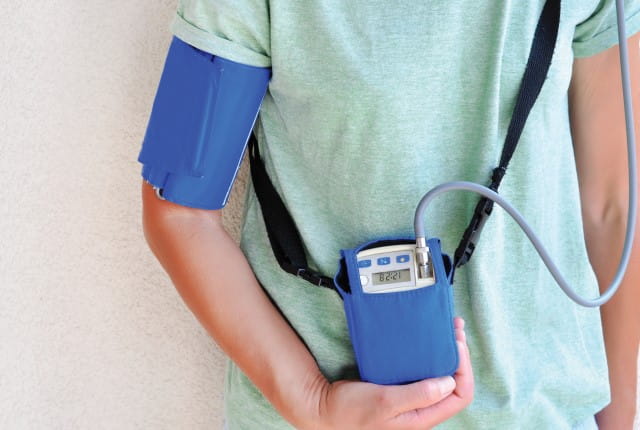
The ABPM device consists of a cuff that inflates and deflates automatically to measure blood pressure at regular intervals. The device is worn on the upper arm, and it is connected to a small portable monitor that records the readings at pre-programmed intervals, usually every 15 to 30 minutes during the day and less frequently during the night. After the monitoring period is complete, the collected data is analyzed by a healthcare provider to get a clearer picture of the person’s overall blood pressure pattern and health.
How Does an Ambulatory Blood Pressure Monitor Work?
ABPM works by employing the same principles as the traditional blood pressure measurement method but with the added benefit of continuous monitoring over an extended period. Here’s a breakdown of how the device works:
Cuff Placement: The ABPM device includes a cuff that is placed around the upper arm, similar to the cuff used during a standard blood pressure check. The cuff is attached to a portable monitor, which contains the circuitry to control the inflation and deflation of the cuff.
Automatic Inflation and Measurement: The device automatically inflates the cuff at set intervals, typically every 15 to 30 minutes during the day and less frequently at night. As the cuff inflates, it temporarily halts blood flow in the arm. The device then gradually deflates, and sensors detect the point at which blood begins to flow again, recording the systolic (the higher number) and diastolic (the lower number) blood pressure readings.
Continuous Monitoring: This process continues automatically over a 24-hour period. The ABPM device records each blood pressure reading, time-stamping them to provide a comprehensive record of blood pressure throughout the day and night.
Data Analysis: After the 24-hour period, the recorded data is uploaded and analyzed by a healthcare professional. The doctor will review the readings to assess trends, such as fluctuations during certain activities, periods of elevated blood pressure, or unusual nighttime patterns.
Log Keeping: The patient may be asked to maintain a diary or activity log during the monitoring period. This log helps to correlate the blood pressure readings with daily activities, such as exercise, meals, sleep, or periods of stress, offering further insights into the factors influencing blood pressure.
Why Is Ambulatory Blood Pressure Monitoring Important?
Traditional blood pressure measurement in a clinical setting can sometimes lead to inaccurate readings due to several factors. This is especially true for individuals with white coat hypertension or masked hypertension. ABPM offers a more accurate and comprehensive approach to blood pressure monitoring, providing a wealth of data to help doctors make more informed decisions about treatment.
1. Accurate Diagnosis of Hypertension:
ABPM is considered one of the most accurate methods for diagnosing hypertension. It provides a clearer picture of a person’s blood pressure over time and in different environments. Blood pressure naturally fluctuates during the day and night based on activity levels, emotional stress, and other factors. Traditional blood pressure measurements in a clinical setting may miss these fluctuations, leading to either an overestimation or underestimation of the true blood pressure. ABPM, on the other hand, monitors blood pressure over an extended period and is less susceptible to temporary spikes caused by anxiety or stress in the doctor’s office.
2. Identification of White Coat Hypertension:
White coat hypertension occurs when a person’s blood pressure rises temporarily due to anxiety or stress while in a healthcare setting. This phenomenon can lead to a false diagnosis of hypertension. ABPM helps to identify white coat hypertension by recording blood pressure over an extended period in the comfort of the person’s daily life. This data shows whether the elevated readings in the doctor’s office are truly reflective of the person’s normal blood pressure or just an isolated response to the medical environment.
3. Detection of Masked Hypertension:
Masked hypertension is the opposite of white coat hypertension. It occurs when a person’s blood pressure appears normal during a doctor’s visit but is actually elevated during normal activities. This condition can be dangerous because it may go undetected, and individuals with masked hypertension may not receive the treatment they need. ABPM is invaluable in diagnosing masked hypertension because it continuously monitors blood pressure outside of the clinical setting, capturing the true picture of a person’s blood pressure throughout the day.
4. Monitoring Blood Pressure at Night:
Blood pressure typically decreases during sleep, a phenomenon known as nocturnal dipping. This drop in blood pressure is a natural part of the body’s circadian rhythm and is considered an important indicator of cardiovascular health. ABPM provides insight into a person’s blood pressure during sleep, which is often overlooked during a typical office visit. In some cases, people may experience non-dipping or reverse dipping, where blood pressure fails to drop at night or actually increases, which is linked to an increased risk of cardiovascular diseases such as heart attack and stroke. ABPM is crucial for identifying such abnormalities.
5. Assessing Blood Pressure Variability:
Blood pressure naturally fluctuates throughout the day and night, and blood pressure variability (BPV) is an important indicator of overall cardiovascular risk. High BPV has been associated with an increased risk of heart disease and other complications. ABPM provides data on how blood pressure changes throughout the day, allowing doctors to assess whether a patient’s blood pressure variability is within a healthy range or if it is higher than normal, indicating a need for further intervention.
Advantages of Ambulatory Blood Pressure Monitoring
ABPM offers several advantages over traditional blood pressure measurement methods, making it an essential tool in hypertension diagnosis and management.
1. Continuous and Comprehensive Monitoring:
ABPM provides continuous blood pressure measurements over a 24-hour period, offering a much more complete and accurate picture of a person’s blood pressure than a single office visit measurement. This helps doctors identify patterns and trends that might otherwise go unnoticed.
2. Improved Accuracy:
Since ABPM captures blood pressure readings during various daily activities, it offers a more accurate assessment of a person’s true blood pressure. Unlike office-based measurements, which may be influenced by anxiety or stress, ABPM records blood pressure in real-world settings, providing data that is less prone to distortion.
3. Identification of Risk Factors:
ABPM helps identify risk factors such as elevated blood pressure during physical activity, abnormal blood pressure changes at night, or significant fluctuations throughout the day. These factors can help doctors identify individuals at higher risk for cardiovascular events, enabling them to take preventative measures or adjust treatment plans.
4. Monitoring Treatment Efficacy:
ABPM is also useful for monitoring the effectiveness of hypertension treatment. By tracking blood pressure over time, healthcare providers can assess whether medications are working as intended or if adjustments are needed. Additionally, ABPM helps doctors determine if a patient’s blood pressure is consistently within a healthy range or if further intervention is required.
5. Patient Convenience:
Although the ABPM device can be worn for 24 hours, it is generally non-intrusive and allows the patient to go about their regular activities. The device is portable and compact, making it easy to wear while performing daily tasks, and the patient does not need to visit the clinic multiple times for repeated blood pressure checks.
Applications of Ambulatory Blood Pressure Monitoring
ABPM has a wide range of applications in clinical practice, particularly in the management and diagnosis of hypertension. Some of the most common uses include:
1. Hypertension Diagnosis and Evaluation:
ABPM is commonly used to diagnose and evaluate hypertension, especially in cases where traditional blood pressure measurements are inconclusive or inconsistent. It helps healthcare providers identify whether a person’s blood pressure is consistently elevated or whether the issue is temporary (as seen in white coat hypertension).
2. Treatment Monitoring:
For patients who are already on antihypertensive medications, ABPM is a valuable tool for monitoring how well their treatment is working. It allows healthcare providers to assess whether blood pressure is under control throughout the day and night and to adjust medication if necessary.
3. Assessing Risk in Special Populations:
ABPM is also used to monitor blood pressure in special populations, such as pregnant women, the elderly, and individuals with comorbid conditions like diabetes or kidney disease. These groups are at higher risk of developing complications related to hypertension, and continuous monitoring provides important data to guide treatment and management.
4. Preoperative and Postoperative Monitoring:
ABPM can be used in the preoperative and postoperative settings to monitor blood pressure during surgery and recovery. Blood pressure fluctuations during this time can indicate underlying issues such as fluid retention, infection, or stress, and ABPM can provide valuable data for identifying these problems.
Limitations and Challenges of ABPM
While ABPM offers numerous benefits, there are some limitations to consider:
1. Patient Discomfort:
Wearing the ABPM device for 24 hours can be uncomfortable for some individuals. The periodic inflation of the cuff can disrupt sleep, and the device itself may feel bulky or inconvenient.
2. Cost and Accessibility:
ABPM devices can be costly, and they may not be accessible in all healthcare settings. In some cases, insurance coverage for ABPM may be limited, making it less available to certain populations.
3. Technical Issues:
There is also the possibility of technical issues with the device, such as inaccurate readings or malfunctioning equipment. Additionally, the quality of data collected may depend on the patient’s compliance with the monitoring protocol, such as keeping a log of their activities.
Conclusion
The Ambulatory Blood Pressure Monitor (ABPM) is a crucial tool for accurately diagnosing and managing hypertension. By providing continuous blood pressure readings over 24 hours, ABPM offers a much more comprehensive and accurate assessment of a person’s blood pressure compared to traditional methods. It helps detect conditions like white coat hypertension, masked hypertension, and non-dipping blood pressure patterns, while also enabling doctors to monitor the effectiveness of treatment. Although there are some challenges with patient comfort and accessibility, ABPM remains one of the most reliable methods for assessing blood pressure variability and managing hypertension, ultimately helping to reduce the risk of cardiovascular events and improve long-term health outcomes.
