
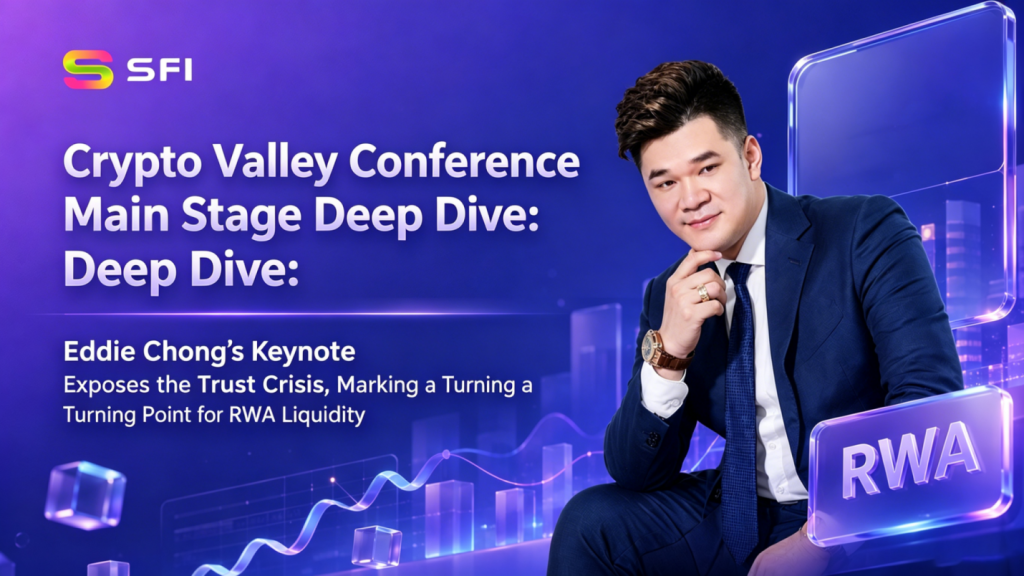
The conversation around blockchain technology is changing. While previous market cycles were often dominated by speculation, token launches, and ambitious projections, today’s industry leaders are increasingly focused on a different challenge: building infrastructure that can support real-world adoption at scale.
That shift was on full display at the 2026 Crypto Valley Conference (CVC), one of Europe’s most influential events for blockchain innovation, digital finance, tokenization, and emerging technologies. Held in Switzerland’s globally recognized Crypto Valley region, the conference brought together regulators, institutional investors, entrepreneurs, technology executives, and policymakers to discuss the future of the digital economy.
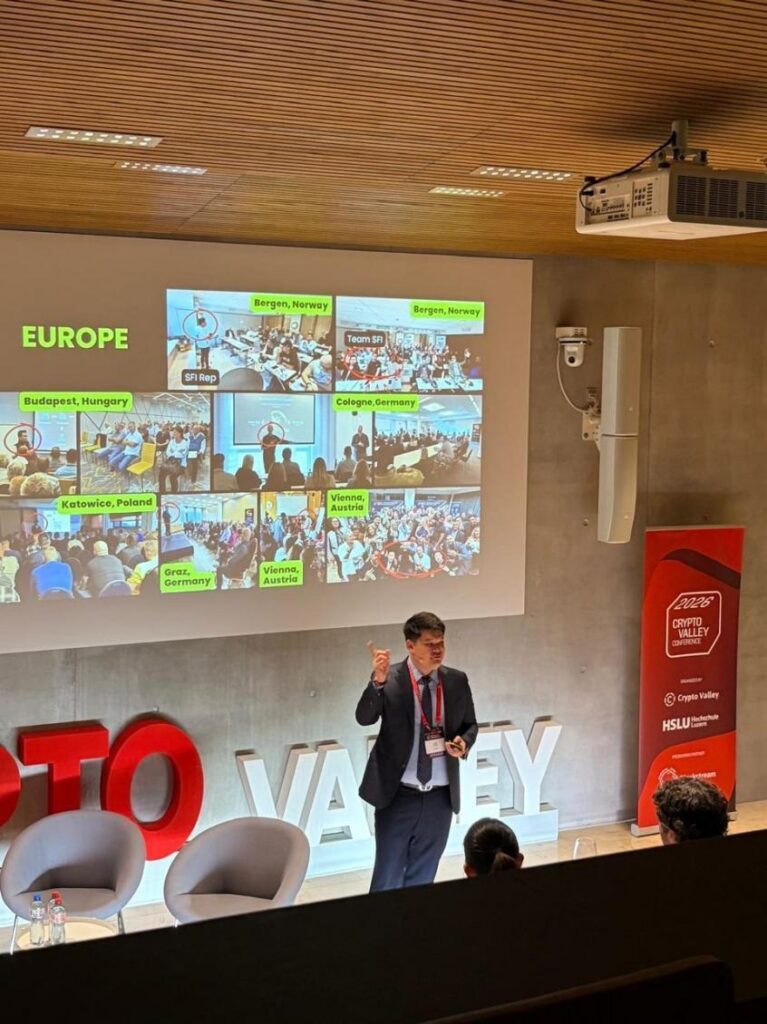
Among the event’s featured speakers, Eddie Chong, Chairman and CEO of SFI Group, delivered a keynote that attracted significant attention from attendees across the blockchain and financial sectors. His presentation focused on what he described as the industry’s most pressing issue: the growing disconnect between technological innovation and market trust.
Rather than emphasizing future possibilities alone, Chong argued that the next stage of blockchain adoption will depend on practical infrastructure, regulatory readiness, and genuine economic activity.
Why Trust Has Become the Industry’s Biggest Challenge
In his keynote presentation, “Back to the Fundamentals: The Crisis of Trust – Why Liquidity is Dying and How We Must Evolve,” Chong addressed several trends currently shaping the digital asset landscape.
Despite rapid technological progress, many blockchain projects continue to face challenges related to liquidity, user adoption, and institutional participation. According to Chong, these difficulties are symptoms of a larger issue: confidence.
He noted that real-world asset tokenization, stablecoin adoption, and AI-powered blockchain applications have all experienced significant growth in recent years. However, questions surrounding regulation, transparency, security, and operational sustainability continue to slow broader market adoption.
As a result, many promising projects struggle to attract long-term capital and maintain active ecosystem participation.
Chong suggested that the industry’s future success will depend less on technical innovation alone and more on its ability to establish trusted frameworks that support users, institutions, and regulators alike.
The Evolution from Web3 to Web4
A central theme of the presentation was the emergence of Web4, which Chong described as the next stage of digital economic development.
Unlike traditional blockchain ecosystems that primarily facilitate human-to-human interactions, Web4 introduces intelligent systems capable of participating directly in economic activity.
AI agents are expected to play an increasingly important role in managing assets, conducting transactions, making purchasing decisions, and interacting with digital services. Yet much of today’s infrastructure remains designed exclusively for human users.
To address this challenge, Chong outlined SFI’s strategy of building an integrated ecosystem where stablecoins, tokenized assets, artificial intelligence, and payment infrastructure operate together within a unified framework.
According to the company, this approach is intended to create a more sustainable and scalable foundation for future digital economies.
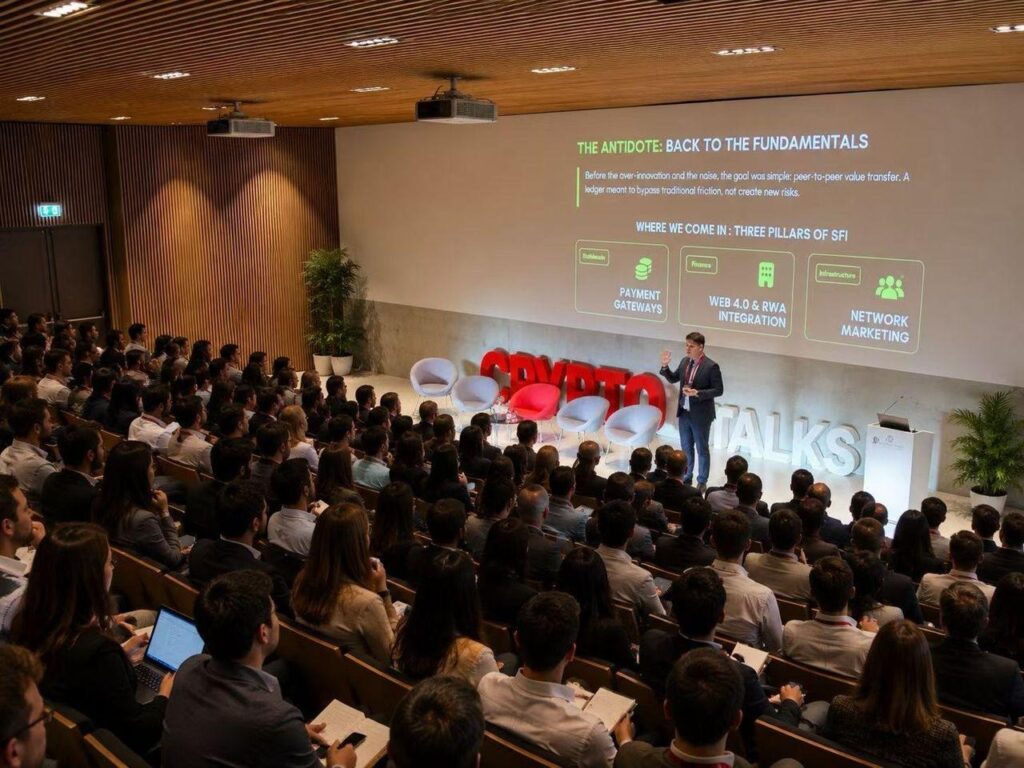
Building a Connected Ecosystem
During the keynote, Chong highlighted several components of the broader SFI ecosystem.
Solulu Club
Solulu Club serves as the ecosystem’s community platform and has reportedly attracted more than 200,000 active users. The platform functions as a participation hub connecting users with various services across the network.
Solulu Pay
Operating across more than 100 countries, Solulu Pay provides payment infrastructure designed to support compliant transactions between traditional financial systems and digital assets.
Caviar
The luxury commerce platform introduces real-world spending opportunities through partnerships involving internationally recognized brands, including Lamborghini and Fendi.
COPX DAO
COPX DAO incorporates AI-powered quantitative trading technologies intended to enhance ecosystem participation and support additional value-generation opportunities.
RWA Incubator & Exchange
The platform supports businesses and asset owners throughout the tokenization process, helping facilitate asset issuance, management, circulation, and liquidity access.
Together, these initiatives form part of SFI’s broader effort to create a complete infrastructure layer connecting digital assets with practical economic activity.
Liquidity Follows Utility
One of the most discussed points from Chong’s presentation was his perspective on liquidity.
According to him, sustainable liquidity cannot be generated through marketing campaigns or market enthusiasm alone. Instead, liquidity emerges when ecosystems create genuine utility that attracts users, businesses, and institutions.
This requires several key ingredients:
- Active user participation
- Real transaction volume
- Regulatory compliance
- Transparent operations
- Trusted infrastructure
Without these foundations, projects may struggle to maintain long-term relevance regardless of technological sophistication.
The message resonated with many attendees who believe the industry is entering a period where execution and operational maturity will matter more than speculative narratives.
Strong Engagement from Industry Leaders
Following the keynote, Chong participated in a series of meetings and networking sessions with representatives from across the blockchain ecosystem.
Participants included institutional investors, licensed custodians, payment providers, compliance specialists, DeFi projects, and artificial intelligence developers.
Discussions reportedly focused on several areas of growing importance:
- Stablecoin settlement infrastructure
- Cross-border payment systems
- Institutional custody solutions
- AI-powered financial applications
- Regulatory compliance frameworks
- RWA tokenization opportunities
The level of engagement reflected increasing interest in infrastructure-focused platforms capable of supporting broader industry adoption.
Regulatory Developments Reinforce Industry Momentum
The significance of the conference was amplified by a major regulatory announcement released the same day by authorities in Zug, Switzerland.
The new guidance addressed multiple aspects of the real-world asset sector, including issuance requirements, circulation standards, compliance expectations, and cross-border settlement considerations.
For many market participants, the announcement represented another step toward greater regulatory clarity for tokenized assets.
As governments and financial authorities continue developing frameworks for digital assets, projects capable of operating within compliant environments may gain a significant competitive advantage.
Chong emphasized that regulatory understanding and adaptability will likely become increasingly important factors in determining long-term industry success.
The Industry’s Next Chapter
The broader message emerging from Crypto Valley Conference 2026 was clear: the blockchain industry is entering a new phase of development.
The conversation is gradually shifting away from short-term speculation and toward infrastructure, adoption, compliance, and real-world utility.
SFI’s participation reflected that transition.
By focusing on the intersection of stablecoins, tokenized assets, artificial intelligence, and payments, the company presented its vision for a more connected and functional digital economy.
Whether discussing liquidity, regulation, or emerging AI-driven financial systems, one theme remained consistent throughout Chong’s presentation: meaningful growth requires trust.
As blockchain technology continues to evolve, the projects best positioned for long-term success may be those capable of transforming innovation into practical solutions that users, businesses, and institutions can rely upon every day.
About SFI
SFI is building a Web4 ecosystem that combines stablecoin infrastructure, digital payments, real-world asset tokenization, and artificial intelligence technologies. Through platforms including Solulu Club, Solulu Pay, Caviar, COPX DAO, and its RWA initiatives, the company aims to create a connected framework for the next generation of digital economic activity.
Follow the SFI Ecosystem:
SFI: https://x.com/SFI_AI
SoluluPay: https://x.com/SoluluPay
Caviar: https://x.com/shopcaviar
COPX DAO: https://x.com/Copx_DAO
Company Name(公司名): SFI
Contact Person(联系人): Davil Lin
Email(邮箱):[email protected]
State(地区): Kuala Lumpur
Country(国家): Malaysia
Website(网站):https://solulu.club/