
Article Outline
- Why Lightweight Materials Matter in Modern Construction and Industry
- Direct Answer: Where Magnesium Alloys Create Real Value
- What Makes Magnesium Alloy Different from Traditional Metals
- AZ31B Magnesium Alloy in Construction and Industrial Components
- Practical Applications for Lightweight Magnesium Alloys
- Design, Machining, and Surface Protection Considerations
- Documents Buyers Should Request Before Ordering
- How to Choose a Reliable Magnesium Alloy Supplier
- Why Work with Miji Magnesium
1. Why Lightweight Materials Matter in Modern Construction and Industry
The strongest component is not always the heaviest one.
That idea has changed the way engineers think about construction systems, industrial equipment, transport structures, automation parts, and precision assemblies. In the past, weight was often accepted as a necessary trade-off for strength. Today, designers are under pressure to reduce mass, improve efficiency, simplify installation, and make components easier to move, assemble, inspect, and maintain.
This is where lightweight metals become more than a material category. They become a design advantage.
For modern buyers, the question is not simply, “Which metal is strong enough?”
A better question is:
Which material gives the part enough strength, better handling, lower system load, and fewer long-term sourcing risks?
That is why lightweight magnesium alloys are receiving more attention in construction-related components and industrial parts. Magnesium alloy is not selected only because it is light. It is selected when weight reduction can improve the total value of a system.
In construction, lighter components can make installation easier. In industrial machinery, they can reduce moving mass. In automation, they can support faster motion response. In electronic and mechanical housings, they can help create compact designs without moving to plastic.
The real value is not in replacing every metal. The value is knowing where magnesium alloy makes the design smarter.
2. Direct Answer: Where Magnesium Alloys Create Real Value
Magnesium alloys support modern construction and industrial components when engineers need lightweight metal materials that can still be machined, formed, inspected, protected, and assembled into functional systems.
They are especially useful in:
- Lightweight equipment frames
- Industrial covers and housings
- Temporary or modular structures
- Machinery brackets and support plates
- Robotic and automation components
- Electronic and control-system enclosures
- Precision machined parts
- Transport and mobility-related structures
- Testing fixtures and engineering prototypes
The material is most valuable when the component benefits from lower weight but still needs metallic performance, dimensional accuracy, and reliable sourcing.
3. What Makes Magnesium Alloy Different from Traditional Metals
Magnesium alloy is often compared with aluminum, steel, and titanium. These comparisons are helpful, but magnesium should not be treated as a direct copy of any of them.
3.1 Lower Weight with Practical Engineering Use
Magnesium is known as one of the lightest structural metals used in industrial applications. That gives engineers a serious opportunity when a part is too heavy in steel or when further weight reduction is needed beyond common aluminum solutions.
But light weight alone is not enough. The part must still meet the demands of the real application. It may need to hold shape, accept machining, support fastening, resist vibration, survive handling, and receive suitable surface protection.
That is why buyers should think in terms of total component value, not just material weight.
3.2 Good Machinability for Custom Components
Many construction and industrial projects do not use only standard shapes. They need customized plates, brackets, covers, blocks, housings, and machined details.
Magnesium alloy can be suitable for CNC machining when the right grade, stock form, tool strategy, chip control, and safety practices are used. For buyers, this means magnesium can support both material supply and part-level customization.
This matters because the best lightweight solution is often not an off-the-shelf item. It is a component designed for a specific load path, assembly space, movement requirement, or installation condition.
3.3 Surface Protection Must Be Planned Early
Magnesium alloy usually requires thoughtful surface protection, especially in environments with humidity, outdoor exposure, salt risk, chemical contact, or galvanic contact with other metals.
Depending on the application, buyers may consider conversion coating, sealing, painting, or other magnesium-compatible finishing methods. The correct surface plan depends on how the component will be used, handled, stored, and assembled.
A serious sourcing discussion should include the environment, not just the drawing.
4. AZ31B Magnesium Alloy in Construction and Industrial Components
For many buyers, AZ31B magnesium alloy is one of the most practical magnesium alloy options to evaluate. It is commonly associated with magnesium plate, sheet, and machined components where a balance of light weight, availability, workability, and general engineering performance is needed.
4.1 Why AZ31B Is Often Considered First
AZ31B is often used when the project requires a lightweight magnesium material that can be supplied in useful forms and processed into functional parts. It is not always the highest-performance magnesium alloy, but it is often a practical starting point for real industrial projects.
Buyers may consider AZ31B for:
- Lightweight plates
- Covers and panels
- Industrial fixtures
- Equipment housings
- Machined brackets
- Prototype structures
- Electronic support components
- Non-load-critical structural elements
- Custom CNC machined blanks
The value of AZ31B is its practical balance. It can help engineers test lightweight design ideas without immediately moving to a more specialized alloy.
4.2 What Buyers Should Confirm for AZ31B
Before ordering AZ31B material, buyers should confirm:
- Required form: sheet, plate, bar, billet, or custom cut stock
- Surface condition
- Thickness and flatness expectations
- Machining allowance
- Critical dimensions
- Final surface treatment
- Inspection requirements
- Certificate and traceability needs
- Packaging method for export or storage
A drawing alone is often not enough. The supplier should understand what the component does and why magnesium was selected.
5. Practical Applications for Lightweight Magnesium Alloys
5.1 Construction Equipment and Installation Tools
Construction is not limited to beams, concrete, and heavy structural steel. Many construction-related systems include equipment frames, fixtures, installation tools, measurement devices, temporary supports, and modular components.
In these areas, lighter materials can help workers move, position, and install components more efficiently. Magnesium alloy may be considered when the part needs to stay metallic but should not add unnecessary weight.
5.2 Industrial Machinery Components
Industrial equipment often includes covers, plates, guards, brackets, mounting bases, and internal support parts. If these components are not primary load-bearing structures, magnesium alloy can sometimes help reduce mass without compromising function.
This may be useful in machines where moving weight affects response, vibration, energy use, or maintenance access.
5.3 Automation and Robotics
Automation systems benefit from reduced moving mass. A lighter arm component, fixture, support plate, or equipment cover can help improve motion response and reduce stress on surrounding components.
Magnesium alloy can be attractive when plastic is not strong or stable enough, but heavier metals create unnecessary load.
5.4 Electronic and Control-System Enclosures
Construction sites and industrial facilities increasingly depend on electronic controls, monitoring devices, sensors, communication modules, and power-management systems.
Magnesium alloy can support compact enclosure design, especially where the component needs a metallic housing, good machinability, and reduced weight.
5.5 Prototype and Engineering Development Parts
Many buyers use magnesium alloy during development because it allows engineers to evaluate lightweight designs before finalizing production. CNC machined magnesium prototypes can help teams test assembly, handling, fit, and performance.
This is especially useful when the final product must balance weight, stiffness, dimensional accuracy, and surface treatment.
6. Design, Machining, and Surface Protection Considerations
6.1 Do Not Design Magnesium Like Steel
Steel can tolerate some design habits that may not translate well to magnesium. If a part is being redesigned for lightweight performance, wall thickness, ribs, fastening areas, radius transitions, and surface protection must be reviewed.
A good lightweight design does not simply copy the old heavy part. It uses the material intelligently.
6.2 Think About Fastening and Contact with Other Metals
Magnesium parts are often assembled with steel, aluminum, brass, or coated hardware. Buyers should consider galvanic contact, insulating layers, washers, coatings, and the final service environment.
This is especially important for construction and industrial components that may face moisture, outdoor storage, or repeated handling.
6.3 Match Machining Strategy to the Grade
If a magnesium component requires CNC machining, the supplier should review tool access, clamping surfaces, thin walls, deep pockets, threaded holes, and finishing requirements.
Magnesium alloy can machine well, but the process should be controlled. Chip handling, dust management, tool sharpness, and cleaning procedures are part of professional magnesium processing.
6.4 Choose Surface Treatment Based on the Environment
Surface protection should not be an afterthought. It should be selected based on real use:
- Indoor industrial use
- Outdoor construction use
- Humid storage
- Contact with other metals
- Cosmetic expectations
- Wear and handling
- Assembly requirements
The right finish helps protect the material and improves buyer confidence.
7. Documents Buyers Should Request Before Ordering
For industrial and construction-related sourcing, documentation is part of product quality.
Depending on the project, buyers may request:
- Mill Test Certificate
- Certificate of Conformance
- Chemical composition report
- Mechanical property report
- Dimensional inspection report
- Surface treatment certificate
- Material traceability record
- RoHS or REACH declaration when applicable
- Packing list and export documents
These documents help purchasing teams, engineers, and quality departments confirm that the delivered material matches the project requirement.
7.1 Standards and Specifications
Magnesium alloy requirements may reference ASTM, AMS, EN, ISO, GB/T, JIS, or customer-specific standards depending on the product form and end-use.
The important point is simple: the standard must match the material and application. A plate requirement is not the same as a casting requirement. A machined part requirement is not the same as raw stock supply. A serious supplier will help clarify this before production or shipment.
8. How to Choose a Reliable Magnesium Alloy Supplier
A reliable supplier should do more than answer with availability.
When sourcing magnesium alloy materials, buyers should ask:
- Which alloy grade best fits this application?
- What stock form is recommended?
- Can the material be cut or prepared for machining?
- What surface condition is available?
- Can certificates and traceability be provided?
- What inspection documents can be supplied?
- Is surface treatment support available?
- Can export packing protect the material during shipment?
- Can the supplier review drawings or application notes?
These questions help buyers avoid a common mistake: treating magnesium alloy as a simple commodity. For modern construction and industrial components, the supplier’s material knowledge can reduce risk before the first order is placed.
- Why Work with Miji Magnesium
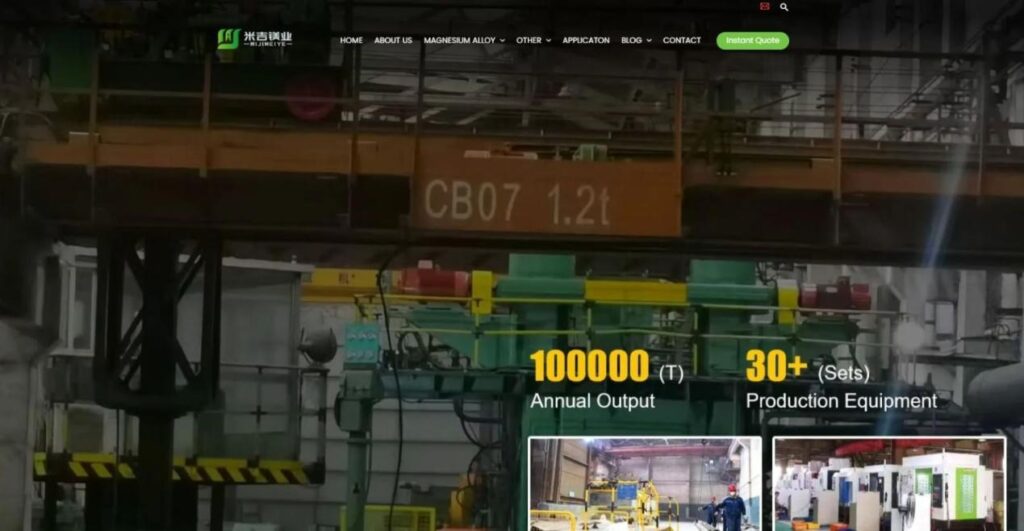
Miji Magnesium supplies magnesium alloy materials and custom solutions for buyers who need lightweight metal options for industrial, construction-related, machining, forming, forging, and application-specific projects.
The company’s value is not only in providing material. It is in helping buyers think through grade selection, stock form, machining suitability, surface protection, inspection documents, and export delivery.
For teams evaluating lightweight materials, this support can be important. The right supplier helps connect the engineering idea with the actual material route. That means better communication, clearer specifications, fewer misunderstandings, and stronger confidence before production begins.
If your project involves magnesium plate, sheet, bar, billet, profile, forged material, cast magnesium, or machined magnesium components, working with a material-focused supplier can help turn a lightweight design idea into a practical industrial solution.